Showing posts with label MW. Show all posts

Wednesday, September 25, 2013

Power Generation at Reduced Cost in Coming Years


The cost of power generation from new and renewable energy sources is expected to further reduce in the coming years. The cost of generation of solar power has already come down to Rs. 8 per unit from Rs.18 per unit few years back. This was stated by Dr. Farooq Abdullah, Minister for New and Renewable Energy while delivering his inaugural address on the Stakeholders Workshop on New and Renewable Energy in the Capital today. Dr. Abdullah stressed on the importance of the new and renewable energy sources in providing energy access to almost 40 per cent of the country’s population which lacks energy access at present. The Minister hoped that renewable energy could become the biggest driver of inclusive growth in rural and remote areas.
Highlighting the progress made by India in the field of new and renewableenergy, Dr. Abdullah stated that UPA has given a big thrust to this area and the Jawaharlal Nehru Solar Mission launched in January, 2010 has led to great success in the area of Solar power. India today has become no. 5 in wind power generation and has developed wind turbines capable of generating 8 Megawatt of power.
Apart from senior officials of MNRE and CAG, a range of stakeholders, including regulatory agencies, 11 State nodal agencies, PSUs like NTPC, NVVN, NABARD, Associations in Solar and Wind Energy, NGOs, IIT Roorkee and subject matter experts from the sector are participating in the one day workshop organized by the office of C & AG of India.
Dr Farooq Abdullah highlighted the importance of promoting the Green Buildings concept of saving the energy consumption since almost 40 per cent of the total energy is utilized in the building sector. The Ministry is pursuing promotion of green buildings in a major way and every new Government building to come up shall have a GRIHA rating of 3 and above.
Delivering the welcome address, the Comptroller and Auditor General of India Shri Shashi Kant Sharma said that CAG has planned to undertake an All India Performance Audit of the New and Renewable Energy sector in the near future. Shri Sharma said that this subject has been chosen keeping in view the tremendous growth potential of renewable energy and its growing importance for the economy and well being of the population at large.
Shri Sharma said that the CAG organization possesses a good experience of undertaking Performance Audit, which provides an independent assessment of the extent to which the audited entity, programme or organization operates efficiently and effectively, with due regard to economy.
Link exchange
Linkorado is a link exchange directory where you can find websites related to your site and request link exchanges

Tuesday, September 17, 2013

Solar Water Heating Systems


Power cut is a consistent problem at the peak hours in summers as well as winters in most of the North Indian cities. In such cases, switching the heating load over to non-conventional sources of energy from the conventional type of resources can eradicate this problem and inconvenience that arise especially during early hours of peak winter season when the hot water is needed the most. The gap between the demand and supply of electricity can be bridged to a great extent by using solar energy based appliances such as Solar Water Heater.
China stands at the top position in the world in the Installations of Solar Water Heating Systems with approx. 80.3% of total installations in the world.
Solar Energy Appliances not only bridge the gap between demand and supply of the electricity but also save a lot of money due to their negligible running cost and also they help in maintaining the ecological balance by reducing pollution.
Solar Water Heaters are designed to heat water by using the solar energy which is available on earth free of cost. Water can be easily heated to a temp. of 60-70˚C.
A typical solar water heater
Main components of solar water heater system are:

A) Solar Collector (to collect solar energy)
B) Insulated tank (to store hot water)
C) Supporting stand
D) Connecting pipes and instrumentation etc. 

Solar Water Heaters can be of following two types:

1- FPC :Flat Plate Collector based
2- ETC :Evacuated Tube Collector based

In FPC based Solar Water Heaters the solar radiation is absorbed by Flat Plate Collectors which consist of an insulated outer metallic box covered on the top with  tempered glass sheet. Inside there are blackened metallic absorber sheets with built in channels or riser tubes to carry water. The absorber absorbs the solar radiation and transfers the heat to the flowing water. Most flat plate collectors have two horizontal pipes at the top and bottom, called headers, and many smaller vertical pipes connecting them, called risers. The risers are welded to thin absorber fins. Heat-transfer fluid (either water or water-antifreeze mixture) is pumped from the hot water storage tank (direct system) or heat exchanger (indirect system) into the collectors' bottom header, and it travels up the risers, collects heat from the absorber fins, and then exits the collector out of the top header.

In ETC based Solar Water Heaters Evacuated Tube Collector is made of double layer concentric borosilicate glass tubes evacuated for providing insulation. Since heat loss due to convection cannot cross a  vacuum, it forms an efficient isolation to keep heat inside the collector pipes.The outer wall of the inner tube is coated with selective absorbing material. This helps absorption of solar radiation and transfers the heat to the water which flows through the inner tube.
Flat plate collectors are generally more efficient than ETC in full sunshine conditions. However, the energy output of flat plate collectors is reduced slightly more than evacuated tube collectors in cloudy or extremely cold conditions.
FPC based systems with metallic collectors are costlier than the ETC based systems with glass tubes for the same system capacity (Ltr/Day).

Monday, September 16, 2013

Odisha Govternment : Harnessing Solar Power


The Odisha state government has approved a proposal for installation of solar panel in roof top of all government establishments in Bhubaneswar and Cuttack area under PPP model and has directed the implementing agency to sign agreements with International Finance Corporation (IFC). 
Last week, the government declared the newly floated company GEDCOL (Green Energy Development Corporation Ltd ) as the nodal agency for on-grid solar energy projects in the state whereas off-grid generation such as solar cooking, pumping, refrigeration, heating and industrial process will be Odisha Renewable Energy Development Agency (OREDA)’s responsibility . 
In the first year of the implementation, the government has decided to use the office rooftops of government offices, agencies, directorates and state PSUs situated in Bhubaneswar and Cuttack, and later the scheme will be planned for other districts. read more..

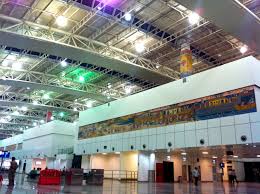
The Biju Patnaik airport in Bhubaneswar will generate 100 KW electricity from solar power plant to meet the daily electricity requirements.

This was an eco-friendly initiative of the airport to generate electricity.

The airport has signed a power purchase agreement (PPA) with a Gurgaon-based private firm, Lanco, for setting up the plant. The firm will sell power to the airport. About 360 solar photo voltaic (SPV) panels have been installed near the airport. Each panel will generate 300 W electricity. 
"The solar power plant will supplement the power requirement of the airport, which requires 3,000 KW of electricity, to run both the new domestic and proposed international terminals," said airport director Sharad Kumar.read more..


Friday, September 13, 2013

Wind and Solar Forecasting System by IBM


IBM has announced a power and weather modelling technology that will help utilities increase the reliability of renewable energy resources. The solution combines weather prediction and analytics to accurately forecast the availability of wind power and solar energy. 
HyRef forecast system graphic via IBM

Jibei Electricity Power Company Limited—a subsidiary company of the State Grid Corporation of China is the first client to use this software. It hopes to increase the integration of renewable power generation by 10%. 
 
The solution, named "Hybrid Renewable Energy Forecasting" (HyRef) uses weather modeling capabilities, cloud imaging technology and sky-facing cameras to track cloud movements, while sensors on the turbines monitor wind speed, temperature and direction. When combined with analytics technology, the data-assimilation based solution can produce accurate local weather forecasts within a wind farm as far as one month in advance, or in 15-minute increments. read more..